Author: Mike

Broadcasting in Traverse City

In this episode of Mike Dell’s World, Mike talks about what it’s like broadcasting and podcasting from Traverse City, Michigan, a place that has always had a unique blend of small-town charm, regional importance, and a surprisingly rich broadcasting history.

Mike shares his own experiences behind the microphone—past and present—along with observations about the local radio landscape, how podcasting fits into the region’s media identity, and how much the area has changed since the early days of local broadcasting.

Topics Covered

  • What “broadcasting in Traverse City” means today

    From terrestrial radio to modern podcasting, the evolution of getting your voice out from northern Michigan.

  • Mike’s beginnings in broadcasting

    A look back at early experiences, equipment, motivations, and what hooked him on audio in the first place.

  • Traverse City’s radio past and present

    Reflections on stations, formats, and personalities that shaped the region over the decades.

  • How podcasting fits into a northern Michigan lifestyle

    The joys and challenges of producing a show in a place better known for lakes, snow, cherries, and tourism.

  • Behind-the-scenes workflow for Mike Dell’s World

    Recording setups, tools, and how Mike keeps episodes flowing while juggling life, flying, work at Blubrry, and northern Michigan weather.

  • Why Traverse City is a great place to create media

    Inspiration, scenery, community, and just enough quirk to keep things interesting.

Leaves

Just a quick update.  I spent the last 2 days dealing with leaves and some other pre-winter things that need to be done around here since the weather was so good for it.

Got a late start recording today.


Legal Pot in Michigan – EPISDOE 420 Dude!

In this milestone episode — number 420, naturally — Mike takes a look at the rise of legal marijuana in Michigan. From the early days of medical cards to today’s booming recreational market, Mike walks through how the laws changed, what it looks like around northern Michigan, and how communities have adapted (or resisted) the cannabis wave. Along the way, he shares observations, local quirks, and a bit of “Up North” perspective.


Topics Covered

• How Michigan Got Here

  • A quick history of medical marijuana legalization (2008)

  • Proposal 1 and the shift to recreational use in 2018

  • What changed on day one — and what didn’t

• Northern Michigan’s Cannabis Scene

  • How Traverse City, Acme, Kingsley, and neighboring towns handled the rollout

  • Local dispensaries, differences between tourist areas vs. rural areas

  • The slow-but-steady licensing process in TC

• Common Questions People Still Ask

  • “Can I grow my own?”

  • “Can you smoke in public?”

  • “What about driving?”

  • “What’s the tax structure like?”

• Tourism & Culture

  • How legal marijuana has changed the vibe for summer visitors

  • The mix of craft breweries, wineries, and now… dispensaries

  • The interesting combo of retirees, tourists, and locals navigating it all

• Mike’s Take

  • Observations as someone who has watched Michigan go from dry counties to legal weed

  • How Michigan tends to “normalize” things once the novelty wears off

  • Why episode 420 was the perfect moment to talk about it

Clinch Park – Trains, boats, Zoo Animals and the little city

n this episode of “Mike Dell’s World,” host Mike Dell discusses Clinch Park in Traverse City. He starts with some light-hearted comments about himself, joking that he has a Dorito chip under his hat. The main topic is Clinch Park, a public park located along West Grand Traverse Bay. Mike describes its amenities, including a large beach, splash pad, concessions, and access to the municipal marina, along with its popularity for walking, biking, and waterfront viewing.

Mike reminisces about Clinch Park’s history, mentioning that it used to house the Clinch Park Zoo, which focused on local Michigan wildlife instead of exotic animals. He shares that the zoo began in the early thirties and was a favorite childhood destination. He provides background on the miniature city attraction within the park, initiated by local civic leader Con Foster during the Great Depression, which included scaled replicas of downtown buildings. Mike recalls that the miniature city was active until 1973 and later moved some of its models to the Music House Museum in Acme, Michigan.

The conversation shifts to the park’s miniature steam train, which offered rides around the zoo until 2007. Afterward, he describes the marina’s features, noting the availability of boat slips and facilities for visitors. He then talks about the removal of the zoo and aquarium in 2007 and how they were replaced by a splash pad, which faced several issues shortly after its installation.

Mike further discusses changes in the park, including the removal of other structures, such as the coal fire electric plant, to expand open spaces. He mentions that the Clinch Park has become a central waterfront area, ideal for outdoor activities and close to downtown Traverse City. He points out that the park is a great spot to watch airshows during the Cherry Festival.

In concluding the episode, Mike says he will return for another podcast the next day but is unsure of the topic. He wraps up by calling it a podcast and signs off.

Traverse City’s First Snowfall

In this episode titled “Traverse City’s First Snowfall,” Mike Dell begins by greeting listeners and introduces the episode as number 418. He shares that it is day twelve of NaPodPoMo and mentions this is the first episode recorded in real-time rather than in advance.

Mike discusses the early snowfall in Traverse City, noting that some areas received significant accumulation while much of it has already melted. He shares the current temperature, converting it to Celsius for clarity, and describes the mixed weather conditions—with rain expected in nearby areas.

Continuing with his narrative, Mike reflects on the change of seasons, mentioning the leaves dropping from the trees, particularly maples and oaks, and recounts the recent yard work he has done to clear the leaves. He mentions plans to prepare his tractor for winter, including getting it serviced at the John Deere dealer after removing the mower deck and attaching the snowblower.

Mike recounts an outing for his wife’s birthday dinner at Outback Steakhouse, describing the significant snowfall while they were dining and the challenges his family faced getting home due to the winter driving conditions. He humorously comments on how drivers often forget how to drive in snow, leading to accidents and challenges on the road.

Towards the end of the episode, Mike decides to keep this episode short and mentions that he will talk about Clinch Park, a notable park in Traverse City with an interesting history, in the following episode.

He wraps up by wishing listeners a great day and prompts them to catch him later.

Veterans Day

From President Wilson on 11-11-1919 – A year ago today our enemies laid down their arms in accordance with an armistice which rendered them impotent to renew hostilities, and gave to the world an assured opportunity to reconstruct its shattered order and to work out in peace a new and more just set of international relations. The soldiers and people of the European Allies had fought and end

ured for more than four years to uphold the barrier of civilization against the aggressions of armed force. We ourselves had been in the conflict something more than a year and a half.

With splendid forgetfulness of mere personal concerns, we remodeled our industries, concentrated our financial resources, increased our agricultural output, and assembled a great army, so that at the last our power was a decisive factor in the victory. We were able to bring the vast resources, material and moral, of a great and free people to the assistance of our associates in Europe who had suffered and sacrificed without limit in the cause for which we fought.

Out of this victory there arose new possibilities of political freedom and economic concert. The war showed us the strength of great nations acting together for high purposes, and the victory of arms foretells the enduring conquests which can be made in peace when nations act justly and in furtherance of the common interests of men.

To us in America the reflections of Armistice Day will be filled with solemn pride in the heroism of those who died in the country’s service, and with gratitude for the victory, both because of the thing from which it has freed us and because of the opportunity it has given America to show her sympathy with peace and justice in the councils of nations

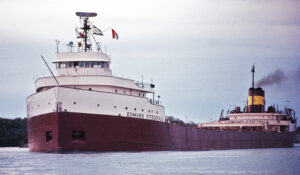
50 years ago tonight Timeline of the wreck of SS Edmund Fitzgerald

This is a replay of an episode I did 10 years ago for the 40th anniversary of the sinking.


Tonight I talk about the wreck of the S.S. Edmund Fitzgerald


Timeline:

NOVEMBER 9
8:30 AM
The Edmund Fitzgerald is loaded with taconite pellets at Burlington Northern Railroad, Dock 1. Superior, Wisconsin The ship is scheduled to transport the cargo to Zug Island on the Detroit River.
2:20 PM
The Fitzgerald departs Lake Superior en route of Detroit with 26,116 tons of taconite pellets.
2:39 PM
The National Weather Service issues gale warnings for the area which the Fitzgerald is sailing in. Captain Cooper on the Anderson radios a freighter (the Edmund Fitzgerald) that he spots.
4:15 PM
The Fitzgerald spots the Arthur M. Anderson some 15 miles behind it.
NOVEMBER 10
1:00 AM
Weather report from the Fitzgerald.
The report from the Fitzgerald shows her to be 20 miles south of Isle Royale. Winds are at 52 knots, with waves ten feet in height.
7:00 AM
Weather report from the Fitzgerald.
Winds are at 35 knots, waves of ten feet. This is the last weather report that the Edmund Fitzgerald will ever make.
3:15 PM
Captain Jesse Cooper, (J.C.) of the S.S. Arthur M. Anderson watches the Fitzgerald round Caribou Island and comments that the Fitzgerald is much closer to Six Fathom Shoal than he would want to be.
3:20 PM
Anderson reports winds coming from the Northwest at 43 knots.
3:30 PM
Radio transmission between the Fitzgerald and the Anderson
Captain McSorley (C.M.) to Captain Cooper (C.C.):
C.M.: “Anderson, this is the Fitzgerald. I have sustained some topside damage. I have a fence rail laid down, two vents lost or damaged, and a list. I’m checking down. Will you stay by me til I get to Whitefish?”
C.C.: “Charlie on that Fitzgerald. Do you have your pumps going?”
C.M.: “Yes, both of them
4:10 PM
The Fitzgerald radios the Arthur M. Anderson requesting radar assistance for the remainder of the voyage.
Fitzgerald: “Anderson, this is the Fitzgerald. I have lost both radars. Can you provide me with radar plots till we reach Whitefish Bay?”
Anderson: “Charlie on that, Fitzgerald. We’ll keep you advised of position.”
About 4:39 PM
The Fitzgerald cannot pick up the Whitefish Point radio beacon. The Fitzgerald radios the Coast Guard station at Grand Marais on Channel 16, the emergency channel.
Between 4:30 and 5:00 PM
The Edmund Fitzgerald calls for any vessel in the Whitefish Point area regarding information about the beacon and light at Whitefish Point. They receive an answer by the saltwater vessel Avafors that the beacon and the light are not operating.
Estimated between 5:30 and 6:00 PM
Radio transmission between the Avafors and the Fitzgerald.
Avafors: “Fitzgerald, this is the Avafors. I have the Whitefish light now but still am receiving no beacon. Over.”
Fitzgerald: “I’m very glad to hear it.”
Avafors: “The wind is really howling down here. What are the conditions where you are?”
Fitzgerald: (Undiscernable shouts heard by the Avafors.) “DON’T LET NOBODY ON DECK!”
Avafors: “What’s that, Fitzgerald? Unclear. Over.”
Fitzgerald: “I have a bad list, lost both radars. And am taking heavy seas over the deck. One of the worst seas I’ve ever been in.”
Avafors: “If I’m correct, you have two radars.”
Fitzgerald: “They’re both gone.”
Sometime around 7:00 PM
The Anderson is struck by two huge waves that put water on the ship, 35 feet above the water line. The waves hit with enough force to push the starboard lifeboat down, damaging the bottom.
7:10 PM
Radio transmission between the Anderson and the Fitzgerald. The Fitzgerald is still being followed by the Arthur M. Anderson. They are about 10 miles behind the Fitzgerald.
Anderson: “Fitzgerald, this is the Anderson. Have you checked down?”
Fitzgerald: “Yes we have.”
Anderson: “Fitzgerald, we are about 10 miles behind you, and gaining about 1 1/2 miles per hour. Fitzgerald, there is a target 19 miles ahead of us. So the target would be 9 miles on ahead of you.”
Fitzgerald: “Well, am I going to clear?”
Anderson: “Yes.

Winterizing Your Life Up North

In this episode of “Mike Dell’s World,” Mike Dell discusses the topic of “Getting Ready For Winter Up North.” He starts with a humorous intro he found while digging through his files, reflecting on the absence of the Internet and video games during his childhood.
Mike then dives into the essentials of winterizing for those living in northern climates, emphasizing the importance of preparing for below-freezing temperatures and snowfall. He mentions specific tasks such as winterizing campers by removing water and replacing it with edible antifreeze, which he explains should be flushed out in the spring.

He continues by highlighting other important winter preparations, like placing snow shovels in accessible locations and ensuring ice scrapers and snow brushes are in vehicles for winter driving. He talks about getting snowblowers operational and servicing tractors, including changing fluids and preparing them for snow removal.

Mike discusses the seasonal change of window air conditioners and reminds listeners to ensure their furnace filters are clean. He stresses the importance of checking propane and oil levels for heating and mentions that many people must also winterize boats and other equipment by running engines to remove water.

In a light-hearted manner, Mike shares anecdotes about driveway markers to avoid losing track of the edges under snow and reminisces about the past when sand barrels helped drivers on the hills. He explains the need for snow tires and the ‘summarizing’ process that occurs in preparation for summer, such as changing oil for snowblowers and clearing debris.

Throughout the episode, Mike shares personal stories, including the collapse of a portable garage due to heavy snow buildup, illustrating that even with preparation, unexpected challenges can arise. He concludes by noting that those who do not experience harsh winters may not have to deal with these kinds of winterization tasks.

Finally, Mike teases the next episode’s topic: the anniversary of the wreck of the Edmund Fitzgerald, hinting that there is more to the story than just the famous song associated with it.

Why Daylight Saving Time Drives Your Dog Crazy

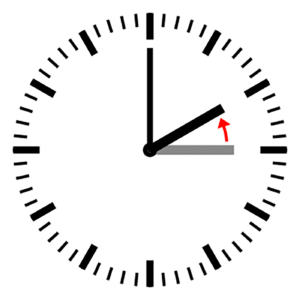
In this episode titled “Why Daylight Saving Time Drives Your Dog Crazy,” host Mike Dell begins by introducing the topic of Daylight Saving Time (DST), explaining that it affects most states in the U.S., and noting that clocks typically change in early November. He highlights his personal experience of living on the western side of the eastern time zone, where the daylight shifts significantly during the summer months, staying light until late evening.

Mike shares how the transition to standard time can confuse pets, particularly his dog, who expects to eat at the usual time but finds it altered after the time change. He mentions that this time change doesn’t genuinely affect the length of the day, but instead just changes the clock.

The discussion moves to the origins and implications of DST, mentioning a common myth that it was implemented for farmers, which he disputes, saying that farmers prefer to follow the sun rather than the clock. Mike also elaborates on how the time change complicates work schedules, especially for their employees in different time zones, including those in the Philippines, who are significantly affected by the changes.

He recalls historical attempts at permanent daylight saving time, referencing legislation from World War times and the 1974 attempt by President Nixon, which was later repealed due to public discontent about children commuting in the dark. Mike reflects on his experience living in Iceland, where daylight and darkness take on extreme forms, emphasizing that the clock’s position doesn’t change natural light patterns.

Towards the end, he proposes a radical idea of adopting a universal time system, which would simplify scheduling across different regions. He humorously reflects on the mundane task of changing various clocks in his life after the time change and closes with a note of appreciation for listeners, encouraging them to stay subscribed as he continues his podcasting journey.

Traverse City’s Airport – KTVC

In this episode of “Mike Dell’s World,” hosted by Mike Dell, the discussion centers on Traverse City Airport (KTVC) and its history. Mike begins by introducing the episode as number 413, aired on November 7, 2025. He mentions his connection to the airport as a pilot and provides insights into its geographical location in relation to his house.

Mike recalls that Traverse City Airport wasn’t always in its current location and describes the original Ransom Field airport, which opened in 1929. He discusses the move to the current airport site, previously a Naval Air Station, in 1946, and highlights the joint ownership by Grand Traverse and Leelanau counties, now overseen by the Northwest Regional Airport Commission.

The narrative covers various details about the airport’s operations, including its initial configuration with multiple runways and the types of aircraft historically present. Mike notes that Traverse City Airport is the fourth busiest airport in Michigan, identifying its airspace classification as Delta, which requires communication with the control tower while allowing casual traffic.

He elaborates on the airport’s recent developments, including a new terminal built in the early 2000s, and how the airport has expanded its flight options over the years. In the past, flights were limited to connections to Detroit and Minneapolis, but Mike explains that several airlines now offer year-round and seasonal non-stop flights to various destinations.

Throughout the episode, Mike shares anecdotes about his experiences at the airport, including interactions with military aircraft and notable historical events, such as presidential visits. He mentions some minor incidents that have occurred at the airport but clarifies that there have been no major accidents in recent memory.

Concluding, Mike emphasizes the importance of Traverse City Airport for Northern Michigan’s connectivity and expresses excitement about future episodes, hinting at a rant planned for the next day.