Month: November 2025

50 years ago tonight Timeline of the wreck of SS Edmund Fitzgerald

This is a replay of an episode I did 10 years ago for the 40th anniversary of the sinking.


Tonight I talk about the wreck of the S.S. Edmund Fitzgerald
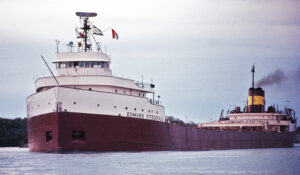

Timeline:

NOVEMBER 9
8:30 AM
The Edmund Fitzgerald is loaded with taconite pellets at Burlington Northern Railroad, Dock 1. Superior, Wisconsin The ship is scheduled to transport the cargo to Zug Island on the Detroit River.
2:20 PM
The Fitzgerald departs Lake Superior en route of Detroit with 26,116 tons of taconite pellets.
2:39 PM
The National Weather Service issues gale warnings for the area which the Fitzgerald is sailing in. Captain Cooper on the Anderson radios a freighter (the Edmund Fitzgerald) that he spots.
4:15 PM
The Fitzgerald spots the Arthur M. Anderson some 15 miles behind it.
NOVEMBER 10
1:00 AM
Weather report from the Fitzgerald.
The report from the Fitzgerald shows her to be 20 miles south of Isle Royale. Winds are at 52 knots, with waves ten feet in height.
7:00 AM
Weather report from the Fitzgerald.
Winds are at 35 knots, waves of ten feet. This is the last weather report that the Edmund Fitzgerald will ever make.
3:15 PM
Captain Jesse Cooper, (J.C.) of the S.S. Arthur M. Anderson watches the Fitzgerald round Caribou Island and comments that the Fitzgerald is much closer to Six Fathom Shoal than he would want to be.
3:20 PM
Anderson reports winds coming from the Northwest at 43 knots.
3:30 PM
Radio transmission between the Fitzgerald and the Anderson
Captain McSorley (C.M.) to Captain Cooper (C.C.):
C.M.: “Anderson, this is the Fitzgerald. I have sustained some topside damage. I have a fence rail laid down, two vents lost or damaged, and a list. I’m checking down. Will you stay by me til I get to Whitefish?”
C.C.: “Charlie on that Fitzgerald. Do you have your pumps going?”
C.M.: “Yes, both of them
4:10 PM
The Fitzgerald radios the Arthur M. Anderson requesting radar assistance for the remainder of the voyage.
Fitzgerald: “Anderson, this is the Fitzgerald. I have lost both radars. Can you provide me with radar plots till we reach Whitefish Bay?”
Anderson: “Charlie on that, Fitzgerald. We’ll keep you advised of position.”
About 4:39 PM
The Fitzgerald cannot pick up the Whitefish Point radio beacon. The Fitzgerald radios the Coast Guard station at Grand Marais on Channel 16, the emergency channel.
Between 4:30 and 5:00 PM
The Edmund Fitzgerald calls for any vessel in the Whitefish Point area regarding information about the beacon and light at Whitefish Point. They receive an answer by the saltwater vessel Avafors that the beacon and the light are not operating.
Estimated between 5:30 and 6:00 PM
Radio transmission between the Avafors and the Fitzgerald.
Avafors: “Fitzgerald, this is the Avafors. I have the Whitefish light now but still am receiving no beacon. Over.”
Fitzgerald: “I’m very glad to hear it.”
Avafors: “The wind is really howling down here. What are the conditions where you are?”
Fitzgerald: (Undiscernable shouts heard by the Avafors.) “DON’T LET NOBODY ON DECK!”
Avafors: “What’s that, Fitzgerald? Unclear. Over.”
Fitzgerald: “I have a bad list, lost both radars. And am taking heavy seas over the deck. One of the worst seas I’ve ever been in.”
Avafors: “If I’m correct, you have two radars.”
Fitzgerald: “They’re both gone.”
Sometime around 7:00 PM
The Anderson is struck by two huge waves that put water on the ship, 35 feet above the water line. The waves hit with enough force to push the starboard lifeboat down, damaging the bottom.
7:10 PM
Radio transmission between the Anderson and the Fitzgerald. The Fitzgerald is still being followed by the Arthur M. Anderson. They are about 10 miles behind the Fitzgerald.
Anderson: “Fitzgerald, this is the Anderson. Have you checked down?”
Fitzgerald: “Yes we have.”
Anderson: “Fitzgerald, we are about 10 miles behind you, and gaining about 1 1/2 miles per hour. Fitzgerald, there is a target 19 miles ahead of us. So the target would be 9 miles on ahead of you.”
Fitzgerald: “Well, am I going to clear?”
Anderson: “Yes.

Winterizing Your Life Up North

In this episode of “Mike Dell’s World,” Mike Dell discusses the topic of “Getting Ready For Winter Up North.” He starts with a humorous intro he found while digging through his files, reflecting on the absence of the Internet and video games during his childhood.
Mike then dives into the essentials of winterizing for those living in northern climates, emphasizing the importance of preparing for below-freezing temperatures and snowfall. He mentions specific tasks such as winterizing campers by removing water and replacing it with edible antifreeze, which he explains should be flushed out in the spring.

He continues by highlighting other important winter preparations, like placing snow shovels in accessible locations and ensuring ice scrapers and snow brushes are in vehicles for winter driving. He talks about getting snowblowers operational and servicing tractors, including changing fluids and preparing them for snow removal.

Mike discusses the seasonal change of window air conditioners and reminds listeners to ensure their furnace filters are clean. He stresses the importance of checking propane and oil levels for heating and mentions that many people must also winterize boats and other equipment by running engines to remove water.

In a light-hearted manner, Mike shares anecdotes about driveway markers to avoid losing track of the edges under snow and reminisces about the past when sand barrels helped drivers on the hills. He explains the need for snow tires and the ‘summarizing’ process that occurs in preparation for summer, such as changing oil for snowblowers and clearing debris.

Throughout the episode, Mike shares personal stories, including the collapse of a portable garage due to heavy snow buildup, illustrating that even with preparation, unexpected challenges can arise. He concludes by noting that those who do not experience harsh winters may not have to deal with these kinds of winterization tasks.

Finally, Mike teases the next episode’s topic: the anniversary of the wreck of the Edmund Fitzgerald, hinting that there is more to the story than just the famous song associated with it.

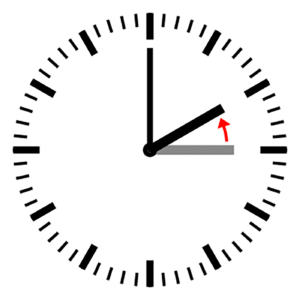
Why Daylight Saving Time Drives Your Dog Crazy

In this episode titled “Why Daylight Saving Time Drives Your Dog Crazy,” host Mike Dell begins by introducing the topic of Daylight Saving Time (DST), explaining that it affects most states in the U.S., and noting that clocks typically change in early November. He highlights his personal experience of living on the western side of the eastern time zone, where the daylight shifts significantly during the summer months, staying light until late evening.

Mike shares how the transition to standard time can confuse pets, particularly his dog, who expects to eat at the usual time but finds it altered after the time change. He mentions that this time change doesn’t genuinely affect the length of the day, but instead just changes the clock.

The discussion moves to the origins and implications of DST, mentioning a common myth that it was implemented for farmers, which he disputes, saying that farmers prefer to follow the sun rather than the clock. Mike also elaborates on how the time change complicates work schedules, especially for their employees in different time zones, including those in the Philippines, who are significantly affected by the changes.

He recalls historical attempts at permanent daylight saving time, referencing legislation from World War times and the 1974 attempt by President Nixon, which was later repealed due to public discontent about children commuting in the dark. Mike reflects on his experience living in Iceland, where daylight and darkness take on extreme forms, emphasizing that the clock’s position doesn’t change natural light patterns.

Towards the end, he proposes a radical idea of adopting a universal time system, which would simplify scheduling across different regions. He humorously reflects on the mundane task of changing various clocks in his life after the time change and closes with a note of appreciation for listeners, encouraging them to stay subscribed as he continues his podcasting journey.

Traverse City’s Airport – KTVC

In this episode of “Mike Dell’s World,” hosted by Mike Dell, the discussion centers on Traverse City Airport (KTVC) and its history. Mike begins by introducing the episode as number 413, aired on November 7, 2025. He mentions his connection to the airport as a pilot and provides insights into its geographical location in relation to his house.
Mike recalls that Traverse City Airport wasn’t always in its current location and describes the original Ransom Field airport, which opened in 1929. He discusses the move to the current airport site, previously a Naval Air Station, in 1946, and highlights the joint ownership by Grand Traverse and Leelanau counties, now overseen by the Northwest Regional Airport Commission.

The narrative covers various details about the airport’s operations, including its initial configuration with multiple runways and the types of aircraft historically present. Mike notes that Traverse City Airport is the fourth busiest airport in Michigan, identifying its airspace classification as Delta, which requires communication with the control tower while allowing casual traffic.

He elaborates on the airport’s recent developments, including a new terminal built in the early 2000s, and how the airport has expanded its flight options over the years. In the past, flights were limited to connections to Detroit and Minneapolis, but Mike explains that several airlines now offer year-round and seasonal non-stop flights to various destinations.

Throughout the episode, Mike shares anecdotes about his experiences at the airport, including interactions with military aircraft and notable historical events, such as presidential visits. He mentions some minor incidents that have occurred at the airport but clarifies that there have been no major accidents in recent memory.

Concluding, Mike emphasizes the importance of Traverse City Airport for Northern Michigan’s connectivity and expresses excitement about future episodes, hinting at a rant planned for the next day.

Part 2 – Downtown Traverse City – Then and Now

Host Mike Dell continues his exploration of Traverse City, focusing on Union Street and reminiscing about the area. He begins by revisiting Front Street, mentioning the Beetle Building—a structure he associates with childhood memories of a Big Boy restaurant. He shares how the building has changed over time, including the closure of Mackinac Brewing and the presence of shops like Hocus Pocus, a magic store where he bought tricks as a kid.

Transitioning to Union Street, Mike describes its location on the west end of downtown Traverse City, starting at the bay and discussing the former Morgan McCool fruit processing plant, known for processing Motts apple products. After the plant’s closure, the land was donated to the college, and the area was transformed into an open space that hosts the National Cherry Festival and other events.

As Mike moves further into the episode, he details various buildings and businesses along Union Street. He describes a large apartment building, previously home to a gas station and a bank, and mentions parking lots and city parking behind those buildings. He reminisces about a fire that affected a building housing a café called “The Dish,” recounting its history and the local establishment Mel G’s Music Shop, where he and fellow band members would purchase instruments.

Continuing his trip down memory lane, Mike mentions a pizza place called Papa Jay’s with an arcade and the bar zone that exists along Union Street, detailing Union Street Station and the now-closed Bill’s Dills, known for karaoke. He reflects on both establishments’ significance in local nightlife and connects back to his personal memories associated with them, including a karaoke mistress named Laura.

Mike shares tidbits about local bars, like Brady’s bar, which has been a staple in the community, and its menu highlighting bluegill fish. He briefly touches on the history of gas stations and notable locations like a mechanic shop that was formerly a gas station.

As he wraps up this extensive recounting, he shares memories of City Bike Shop, where he purchased his bicycle and had it serviced, and mentions Fivensons, known for their memorable TV commercials. After a lengthy trip through the history of Union Street and its surroundings, he concludes by discussing upcoming episodes and the intent to continue providing content as part of National Podcast Post Month.

Mike thanks his listeners for staying engaged and expresses excitement about future topics, hinting at an aviation-related episode to come, before signing off.

Part 1 – Downtown Traverse City – Then and Now

Link to Stacy’s video in 1984:  https://www.c-span.org/program/interview/staceys-restaurant/93196


In this episode of “Mike Dell’s World,” titled “A Nostalgic Stroll Through Traverse City,” host Mike Dell introduces the topic of downtown Traverse City, emphasizing a nostalgic look back at its history rather than focusing solely on the present.

Mike begins by acknowledging the show’s date and hinting at an initial plan to discuss November in Traverse City, but decides instead to dive into the broader topic of the downtown area across time. He sets the scene, noting the arrival of colder weather and the first snowfall, which influences his nostalgic mood.

Moving into descriptions, he outlines what constitutes downtown Traverse City from Pine Street to the parkway, mentioning key landmarks. He describes the historic Fifth Third Bank building, originally the Traverse City State Bank, highlighting its iconic dome and heated sidewalks which prevent snow from accumulating. Mike reflects on his childhood memories of the bank’s motorized revolving door.

Next, he discusses the Park Place Hotel, which dates back to 1930, remarking on its lighthouse beacon. He shares memories of the City Opera House, built in 1890, mentioning various performances he has attended there, including a local gala and shows by notable entertainers.

Mike recounts the transformation of several buildings over the years, such as the former True Value Hardware store, which was affected by fire and later revamped into storefronts. He praises Traverse City for having a thriving downtown despite the convenience of big box stores outside the city.

The conversation continues to the Whiting Hotel, recalling its reputation as a cheap stay in the 70s and 80s and its current transformation into upscale apartments. He discusses the Hannah Lay building, emphasizing its historical significance related to lumber baron Perry Hannah, and recalls various stores that were once located there.

Mike also brings up the Michigan and State theaters, noting their similar designs and contrasting them with the local roller skating rink that used to be underneath the Michigan theater. He reminisces about his childhood experiences there and the eventual transformations of both theaters into new spaces.

He describes the rise of Horizon Books, which evolved from a small store to a large community-centered bookstore featuring a café, music events, and book signings, emphasizing its importance in the downtown culture.

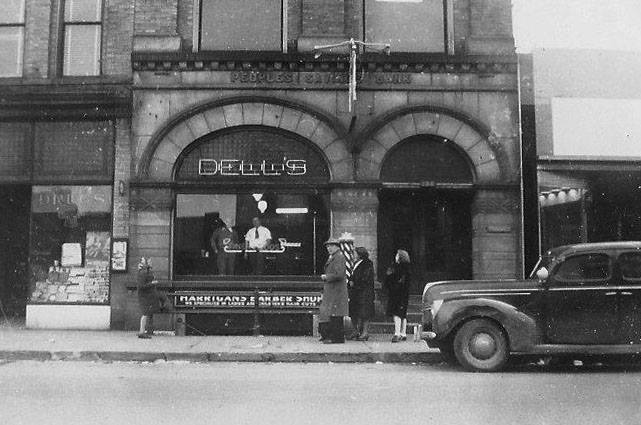
As he moves forward, Mike reflects on his family’s past with Doll’s Restaurant, once owned by his grandfather, and highlights both the uniqueness and character of various now-defunct eateries, including Stacy’s and the Beanpot.

The episode concludes with Mike discussing local radio history and the significance of old establishments like Murray’s Boats and Motors. He emphasizes the growth and change within Traverse City’s downtown while sharing personal anecdotes and fond memories from his life.

Ultimately, Mike notes that he intends to continue the exploration of downtown Traverse City in a subsequent episode, specifically focusing on Union Street and the surrounding area. He wraps up this episode at the twenty-eight-minute mark, indicating a follow-up discussion is imminent.

Take The Long Way Home

In this episode of “Mike Dell’s World,” titled “Taking the Long Way Home,” host Mike Dell begins by ensuring the recording is set up correctly while joking about keeping his dog, Benny, from interfering. After greeting listeners with various times of day, Mike shares that he just had lunch at Burger King with Benny, who enjoyed a plain hamburger.

Mike introduces the episode’s topic of taking the long way home, explaining that he enjoys scenic routes rather than the quickest paths back to his house. He describes driving along Five Mile Road and discusses the area around him, including its woodlands and the slight elevations. As he drives, he comments on the beautiful weather—55 degrees and sunny—with the fall colors still visible but past their peak.

As he navigates the roads, Mike reminisces about his family’s history in the area, including his uncle’s place from the 1970s. He mentions the names of several lakes, emphasizing the beauty and charm of taking slower, scenic routes through the Forest Lakes area and reflecting on past experiences from his childhood.

Mike encounters some minor driving challenges, like getting caught behind other vehicles and needing to manage his dog’s comfort with the seatbelt and windows. He shares details about a road known as Supply Road, which is popular among car enthusiasts and motorcyclists for its curves and scenic beauty.

He also contrasts Supply Road with M-22, another renowned highway in Michigan, sharing anecdotes about local tourism and roadside attractions, including a t-shirt company that has trademarked the highway sign. As he nears his home, Mike discusses the significance of local landmarks like Roy’s General Store, mentioning its array of products and offerings.

Towards the end of the episode, Mike reflects on the seasonal changes in Michigan, humorously commenting on the challenges of construction and tourist traffic that occur throughout the year. he expresses his intention to record more mobile podcasts and hints at doing a podcast from the airport soon.

As he approaches home, he remarks on the challenges of navigating traffic lights and concludes the episode by encouraging listeners to stay tuned for more. Throughout the episode, Mike creates a humorous and laid-back atmosphere while sharing his thoughts and experiences on the joys of taking the long way home.

Just Another Fast Food Building

Before it was “110 Munson Ave”

  • The site used to be addressed as 1504 E. Front Street in Traverse City.

  • Back then it was part of the old fast food strip east of downtown. At some point in the early 1990s, that section was renumbered/reassigned and the same building became 110 Munson Ave (Munson Ave and E. Front basically merge/split in that corridor). 

So: same physical spot, two different street numbers over time.


The business history, oldest to newest

Arthur Treacher’s Fish & Chips (late 1970s / very early 1980s)

  • One of the classic British-style fried fish & chips chains.

  • The Traverse City location was listed at 1504 E. Front St., which is the same building that later became 110 Munson Ave. 

  • Arthur Treacher’s expanded hard in the ‘70s/early ‘80s and then started fading nationally in the mid-’80s. The Traverse City shop was part of that early wave. 

Burger Square (≈1981–1984)

  • After Arthur Treacher’s left, the spot became Burger Square around 1981.

  • Locals describe Burger Square as a slider/burger place, kind of White Castle-ish. It only lasted a few years, into the mid-1980s. 

Dairy Queen (mid-1980s to early 1990s)

  • After Burger Square, the same building turned into a Dairy Queen.

  • Sources say that Dairy Queen ran there through the late ’80s and very early ’90s, then closed/relocated. 

  • This is also the point where the address shifts: that old DQ at 1504 E. Front is later referred to as 110 Munson Ave. 

Schlotzsky’s Deli (early 1990s)

  • In the early ’90s, after Dairy Queen, the building became a Schlotzsky’s Deli (the Austin-style sandwich chain).

  • That didn’t last super long; by the mid/late ’90s it had flipped again. 

Luigi’s Pizzeria & Café (mid/late 1990s into 2000s)

  • Next up was Luigi’s Pizzeria & Café, doing pizzas, pasta, sandwiches.

  • Luigi’s shows up in business directories at 110 Munson Ave and is tied to the Gutowski family locally. One listing says Luigi’s (at that address) dates back to the 2000s and had a handful of employees. 

  • A note from the owners suggests this Munson Ave location eventually closed around the late 2000s/very early 2010s. 

Mancino’s Pizza & Grinders (late 1990s / 2000s era overlap)

  • The same family (Valentine “Billy” and Linda Gutowski) also operated Mancino’s Pizza & Grinders in Traverse City.

  • Mancino’s is described as their independent, mom-and-pop pizza/grinder shops that started in the area in the 1990s and expanded to multiple Traverse City locations. 

  • Mancino’s is specifically listed at 110 Munson Ave in older directories, and some maps still show “Mancino’s Pizza & Grinders” or “Gutowski Restaurants” tied to that address even after it was gone. 

  • Over time, the Gutowskis rebranded/relocated the Mancino’s/“bread nuggets” operation to other Traverse City spots (Chum’s Corner, West Bayshore, etc.), and the Munson Ave shop closed. 

That’sa Pizza (2010s–2020)

  • After Mancino’s/Luigi’s, the building housed That’sa Pizza, a long-running Traverse City pizza brand that traces back to 1981. 

  • That’sa Pizza ran takeout/delivery from 110 Munson Ave through the 2010s. By early 2021 the Munson Ave location had shut down; That’sa Pizza continues today at other Traverse City locations (Long Lake Rd, Hammond Rd, Acme/Williamsburg), but not at 110 Munson. 

Jersey Mike’s Subs (2021–present)

  • In 2021, a Jersey Mike’s Subs franchise moved in.

  • Local business news in February/March 2021 said Jersey Mike’s would open in the “former That’sa Pizza space” at 110 Munson Ave, targeting a late-March grand opening. 

  • Jersey Mike’s is still the current tenant, and their official store listing shows the address as 110 Munson Ave, Traverse City, MI 49686, phone (231) 421-1379, open daily. 


Quick summary timeline

  • Late ’70s / early ’80s: Arthur Treacher’s Fish & Chips

  • ~1981–1984: Burger Square

  • Mid ’80s–early ’90s: Dairy Queen

  • Early ’90s: Schlotzsky’s Deli

  • Mid ’90s–2000s: Luigi’s Pizzeria & Café / Mancino’s Pizza & Grinders (Gutowski family)

  • 2010s–2020: That’sa Pizza

  • 2021–now: Jersey Mike’s Subs

That’s the lineage of 110 Munson Ave: it’s basically been a rotating “fast casual / pizza / sandwiches” spot for ~40+ years, starting as fish & chips and ending up as East Coast subs. 


Welcome to Interlochen Michigan

Interlochen is a small town in NW Lower Michigan near Traverse City and is home to the Interlochen Center for the Arts and WIAA Radio.

I grew up near there and it’s  a great little town.   Check out: https://en.wikipedia.org/wiki/Interlochen,_Michigan


– Episode Title: “Welcome to Interlochen”
– Host: Mike Dell
– Location: Interlochen, Michigan, 15 miles from host’s home
– Personal Connection: Frequent visits for brunch and family gatherings
– Key Feature: Interlochen Center for the Arts – a renowned performing and visual arts school
– Population: 694 (2020 census), significantly increased by summer music camp attendees
– Nearby Family: Sister lives in the area
– Geographical Context: Reference to US highways nearby
– Town Status: Unincorporated, with its own post office and ZIP code
– Infrastructure: Small airport with two grass runways; ongoing tension with township regarding its existence
– Name Origin: “Interlochen” – Latin for “between” and Scottish for “lakes,” located between Green Lake and Duck Lake
– Concert Venue: Arts academy venue accommodates ~4,000, with views of Green Lake
– Winter Activities: Ice fishing on Green Lake, driving across a frozen ice bridge
– Community Memories: Hanging out at state park beach, deep-fried smelt culinary experience
– Graduation Venue: Traverse City Public Schools holds ceremonies at Kresge Auditorium in Interlochen
– Notable Alumni: Includes Chip Davis (Mannheim Steamroller) and singer Jewel
– Next Episode Tease: Focus on an interesting building in Traverse City

Welcome to November Up North

In the podcast episode titled “Welcome to November Up North,” host Mike Dell kicks off his series for NaPodPomo on November 1st, 2025. He introduces the theme of the month, where he plans to discuss various aspects of northern Michigan, particularly Traverse City. Mike mentions that each day he will share interesting stories, history, or happenings from the area.

He notes his participation in NaPodPomo, which he describes as the eighteenth year of the initiative that started in 2007. Mike encourages listeners to visit napodpromo.org for more information and to find a super mega feed that includes other participating shows for November.

The episode is intended to be a collection of short daily episodes, incorporating elements of history and nostalgia, although he humorously remarks that nostalgia can sometimes feel like a disease. Mike also addresses his recent health setback, mentioning that he had been feeling unwell, likening his condition to being kicked in the chest by a donkey, which has left him a bit scratchy in his voice.

He concludes the episode by expressing his plans to record daily updates throughout November, signaling the start of this new series.  #napodpomo25


NaPodPoMo catch all feed:  https://feed.informer.com/digests/ZOYLP5GJYK/feeder.rss

NaPodPoMo website https://napodpomo.org/